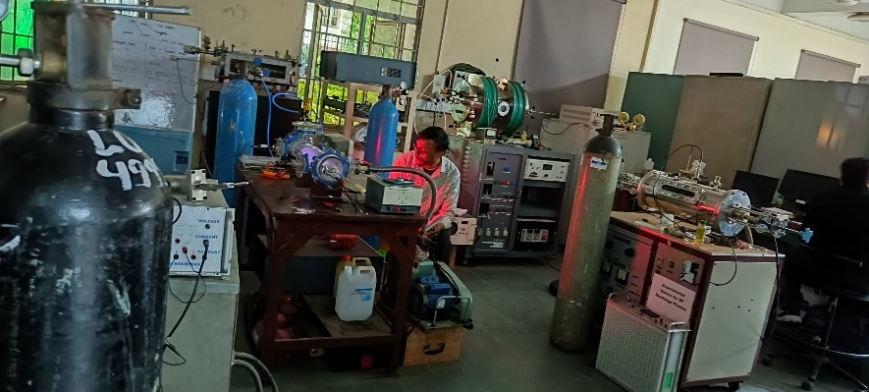
We are very familiar with the three states of matter: solids, liquids, and gases. What will be the next state of matter if further energy is supplied to the gaseous state of matter? To get the answer to this question, we need to look at the visible matters (SUN, STARS) of the universe, which are not in the gaseous state, but are in another state of matter (fourth state of matter). This fourth state of matter is called “PLASMA”. The plasma is an ionised gas phase where charged particles (positive and negative) coexist and respond collectively to various electromagnetic forces. The dynamics of this charged medium under the action of various electromagnetic forces are very complex; therefore, fundamental studies at the laboratory scale are essential. The diverse applications of plasma, including astrophysics, solar physics, materials science, medicine, agriculture, nuclear fusion, space exploration, and biological sciences, motivate young physicists to pursue research in fundamental or applied plasma physics. The Plasma Physics Laboratory (Experimental) at the Department of Physics and Astrophysics, University of Delhi, advances fundamental research (Gas breakdown studies, Nonlinear dynamics of plasma systems, waves and instabilities in low-pressure plasma, etc.) and applied research (Dielectric barrier discharges for wastewater treatment, DBD for nitrogen fixing, DBD for surface modifications, etc.) in the plasma physics domain.
Experimental Plasma Physics Laboratory
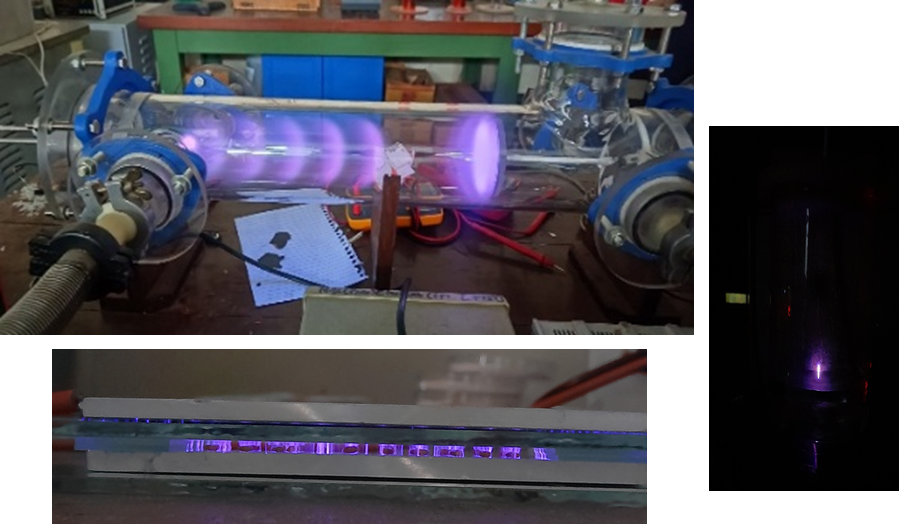
Ionized gas (PLASMA)
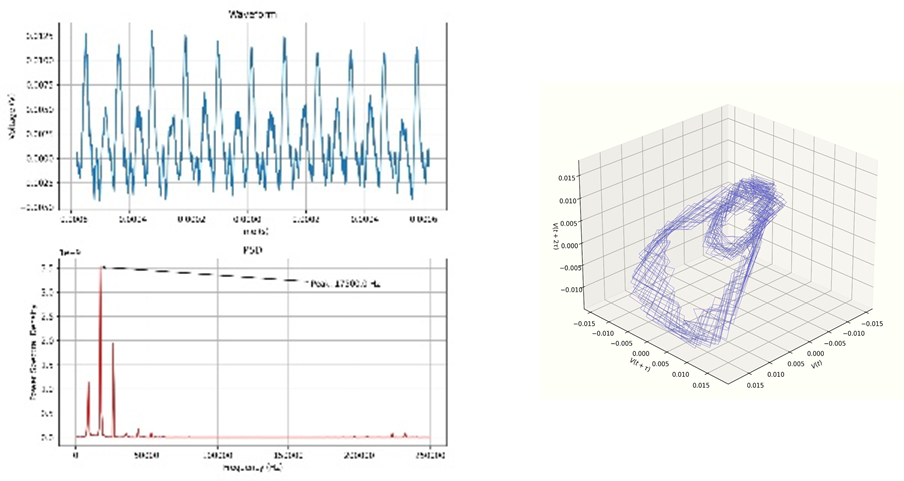
Nonlinear dynamics of Plasma
-
 Mangilal Choudhary (Assistant Professor)
Experimental Plasma Physics
mchoudhary@physics.du.ac.in
https://people.samarth.edu.in/index.php/profile/user/index/DU/lzr https://sites.google.com/view/mchoudharydu