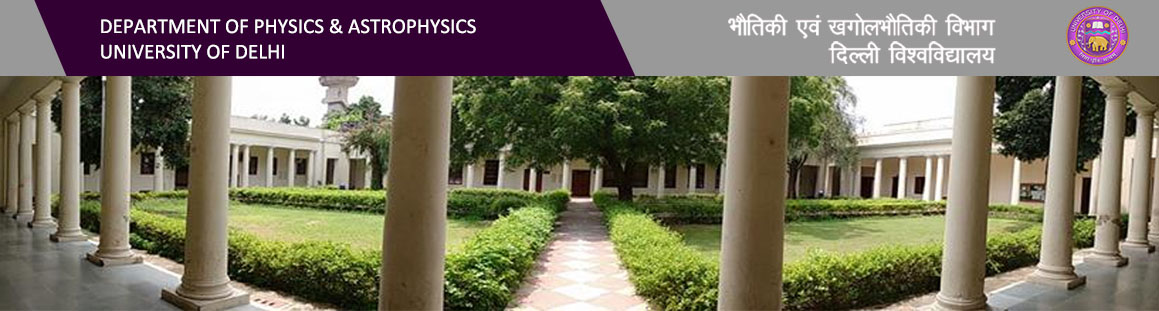
The Common Equipment Facility at the Department of Physics and Astrophysics, University of Delhi is a hub for advanced research, equipped with state-of-the-art instruments essential for material characterization. It provides researchers access to sophisticated tools like XRD, AFM, SEM, UV-VIS, DSC, and photoluminescence systems, fostering innovation and interdisciplinary research.
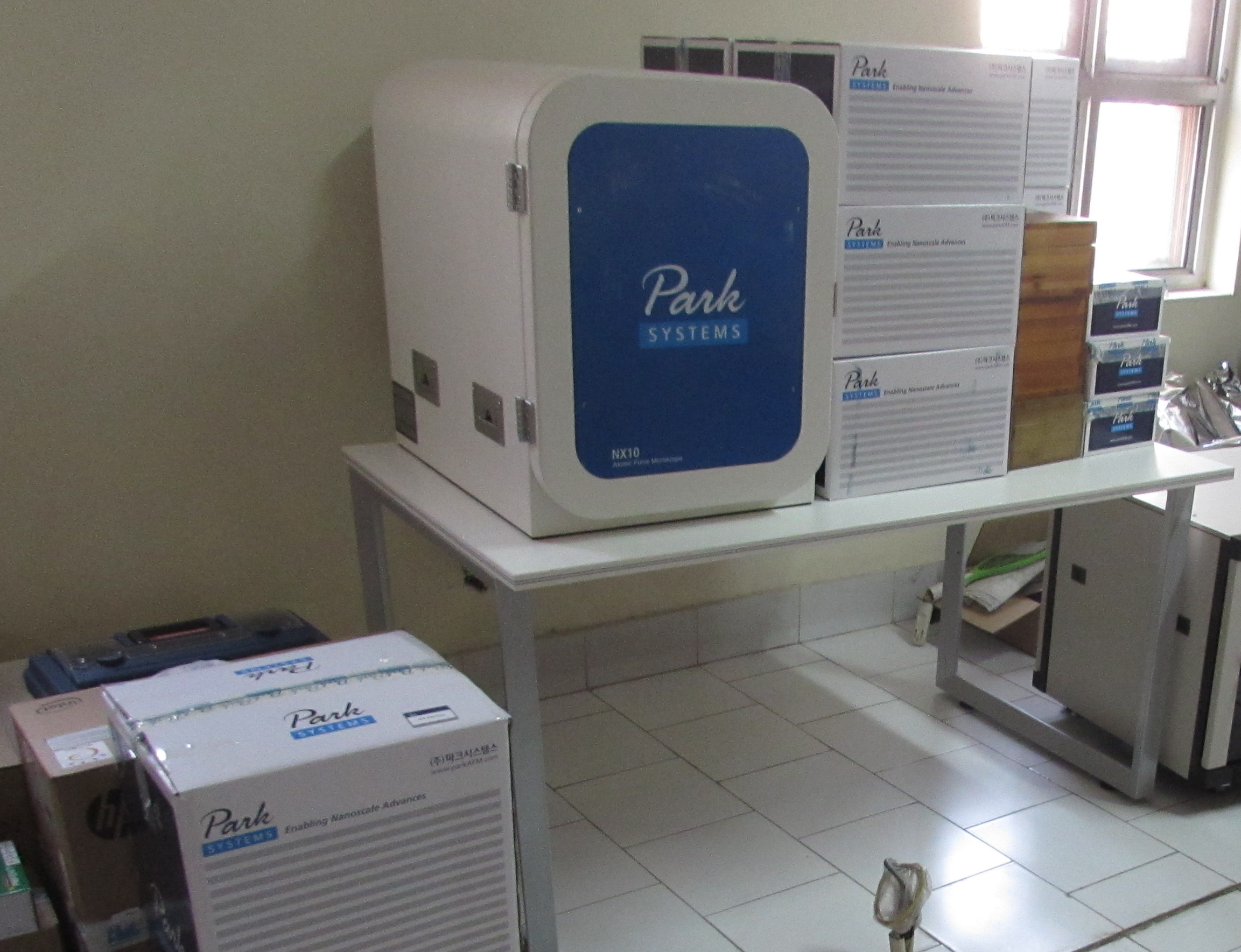
Park Systems NX10 Atomic Force Microscope (AFM)
The Park Systems NX10 AFM is a high-performance atomic force microscope designed for nanoscale imaging and analysis. It enables visualization of surface topography with sub-nanometer resolution, making it ideal for materials science, semiconductor research, and biological studies. The NX10 offers advanced scanning modes, including non-contact and conductive AFM, to probe mechanical, electrical, and chemical properties. Its closed-loop control ensures accuracy and repeatability, while user-friendly software simplifies data acquisition. Researchers use the NX10 to study nanostructures, thin films, polymers, and biomolecules, gaining insights into morphology and functionality that are critical for innovation in nanotechnology.
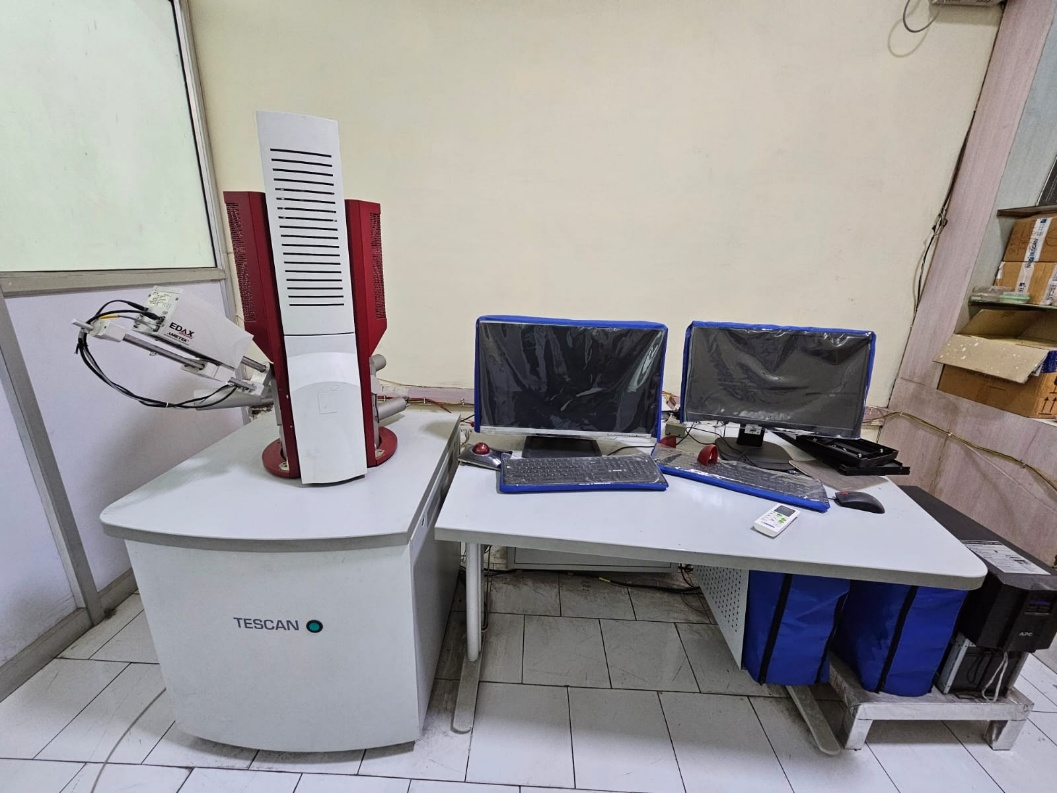
Tescan Scanning Electron Microscope (SEM)
The Tescan Scanning Electron Microscope (SEM) is a state-of-the-art instrument designed for high-resolution imaging and analysis of materials at the micro- and nano-scale. It provides detailed insights into surface morphology, composition, and structural features, supporting applications in materials science, semiconductors, batteries, life sciences, and geology. Equipped with stable beam performance, Wide Field Optics®, and integrated analytical tools such as EDS, Tescan SEMs combine precision with ease of use. Their versatility extends to advanced configurations like FIB-SEM and micro-CT, enabling 3D imaging and sample preparation. Trusted worldwide, Tescan SEMs empower researchers to accelerate discovery and innovation.
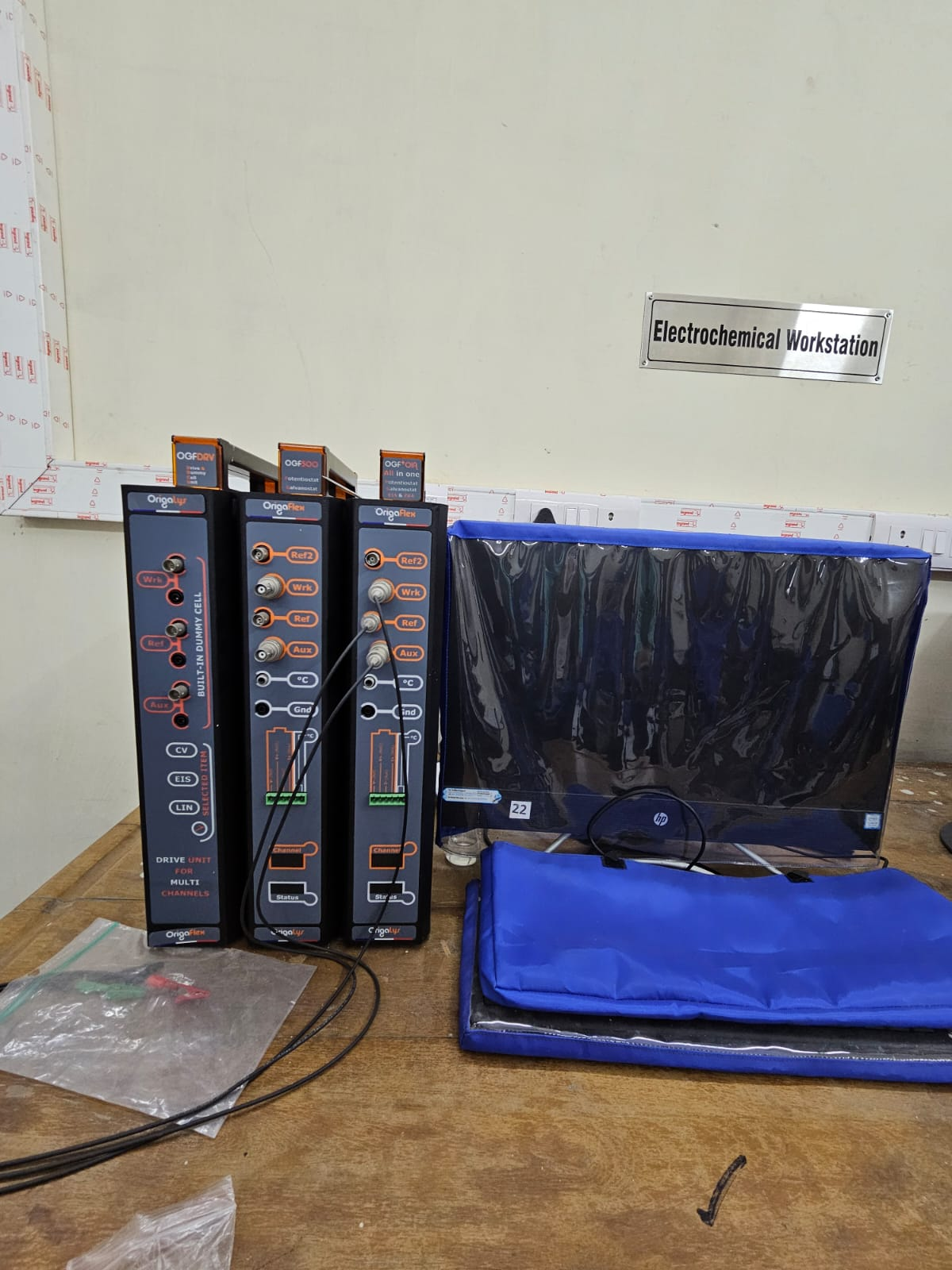
Origalys Electrochemical Workstation
The Origalys Electrochemical Workstation is a versatile tool for studying electrochemical processes in batteries, supercapacitors, sensors, and corrosion systems. It supports techniques such as cyclic voltammetry, chronoamperometry, and electrochemical impedance spectroscopy, enabling comprehensive analysis of charge transfer and reaction kinetics. With precise control of potential and current, the workstation provides reproducible data essential for fundamental and applied research. Its modular design allows integration with accessories for rotating electrodes or temperature control. Widely used in energy storage and biosensing research, the Origalys workstation helps scientists design efficient materials and devices by probing their electrochemical behavior.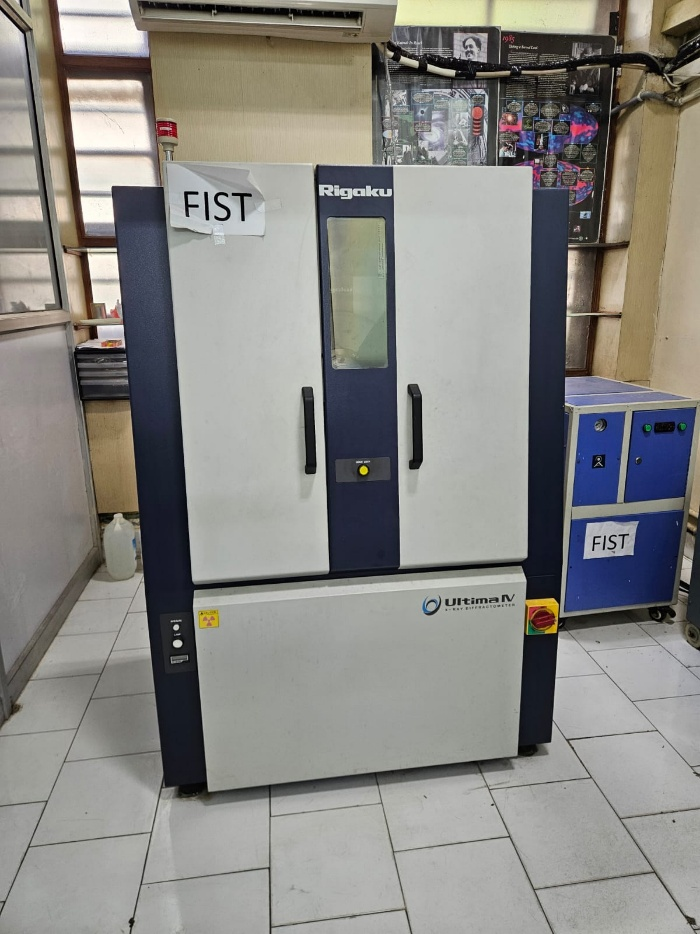
Rigaku Ultima IV X-ray Diffractometer
The Rigaku Ultima IV X-ray Diffractometer is a versatile instrument used for structural characterization of crystalline materials. It employs X-ray diffraction to determine lattice parameters, crystallite size, phase identification, and texture analysis. With advanced optics and automated sample handling, it provides high-resolution data suitable for both qualitative and quantitative studies. Researchers rely on this system to investigate thin films, powders, and bulk samples across materials science, chemistry, and physics. Its precision and reliability make it indispensable for understanding crystal structures, monitoring synthesis processes, and validating material properties in academic and industrial laboratories.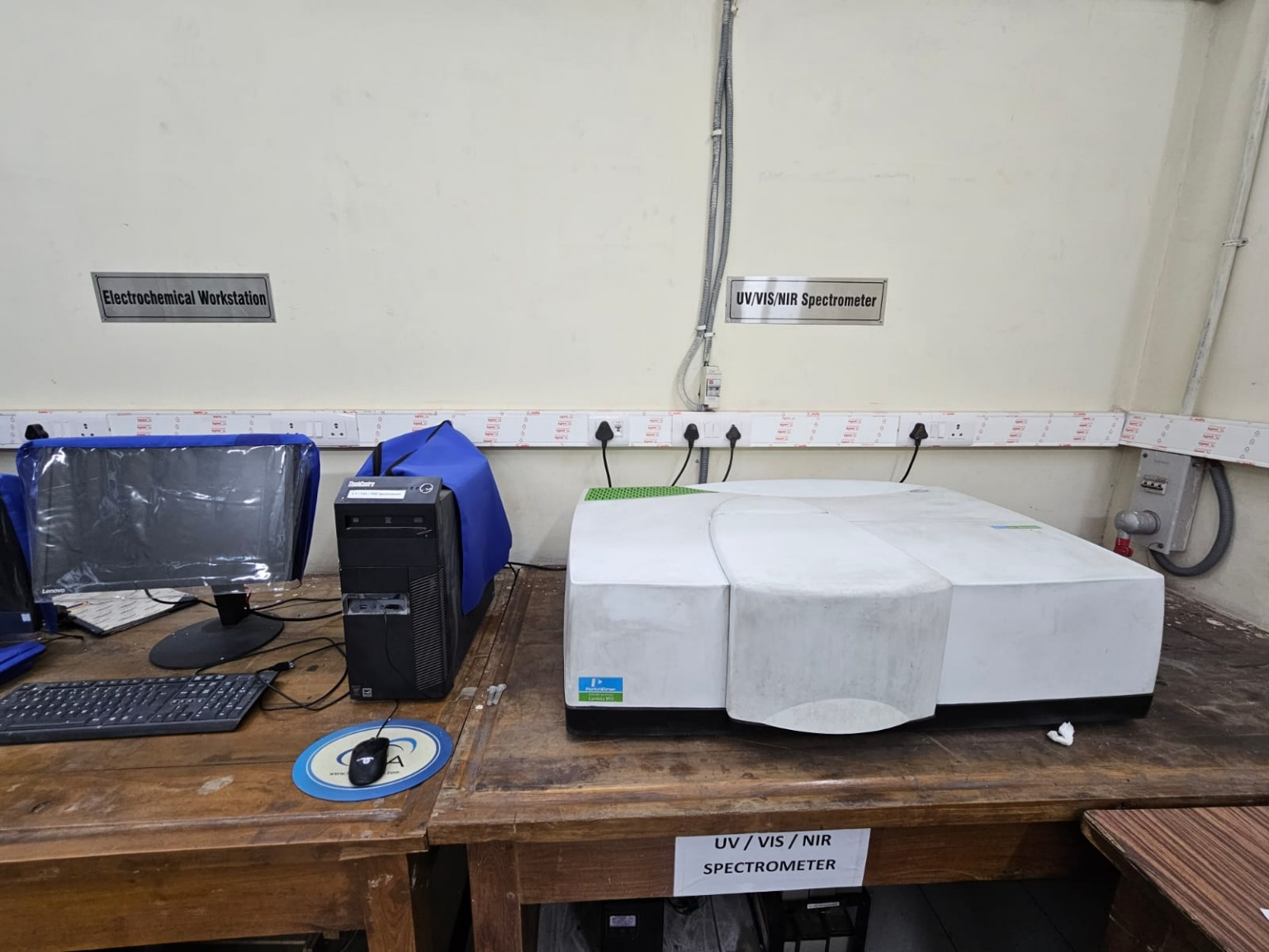
UV-VIS-NIR Spectrosocpy
The Perkin Elmer Lambda 950 UV/VIS/NIR spectrophotometer is a high-end instrument for optical characterization across ultraviolet, visible, and near-infrared ranges. It measures absorbance, transmittance, and reflectance with exceptional accuracy, making it suitable for advanced materials, coatings, and thin films. The Lambda 950 features dual-beam optics, integrating spheres, and customizable accessories for solid, liquid, and powder samples. Researchers use it to study band gaps, optical constants, and photonic properties, supporting applications in photovoltaics, semiconductors, and nanomaterials. Its wide spectral range and sensitivity make it a benchmark system for precise optical analysis in research laboratories.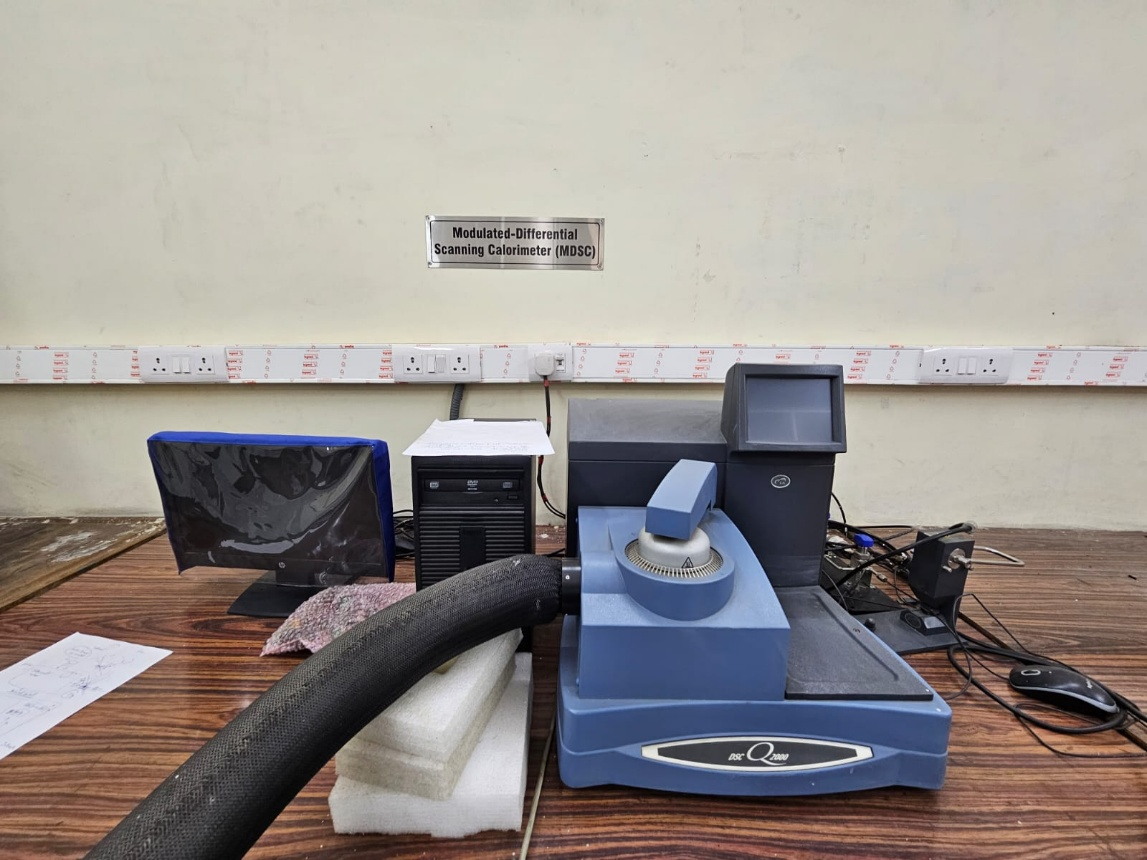
TA Instruments Q2000 Modulated Differential Scanning Calorimeter (MDSC)
The TA Q2000 MDSC is a sophisticated thermal analysis instrument that measures heat flow associated with material transitions. By applying modulated heating, it separates reversible and non-reversible processes, providing deeper insights into glass transitions, crystallization, and curing reactions. The Q2000 offers high sensitivity and flexible programming, making it ideal for polymers, composites, and pharmaceuticals. Researchers use it to study thermal stability, phase behavior, and kinetic parameters, which are critical for material design and quality control. Its precision and advanced software make the Q2000 a powerful tool for both academic research and industrial applications.
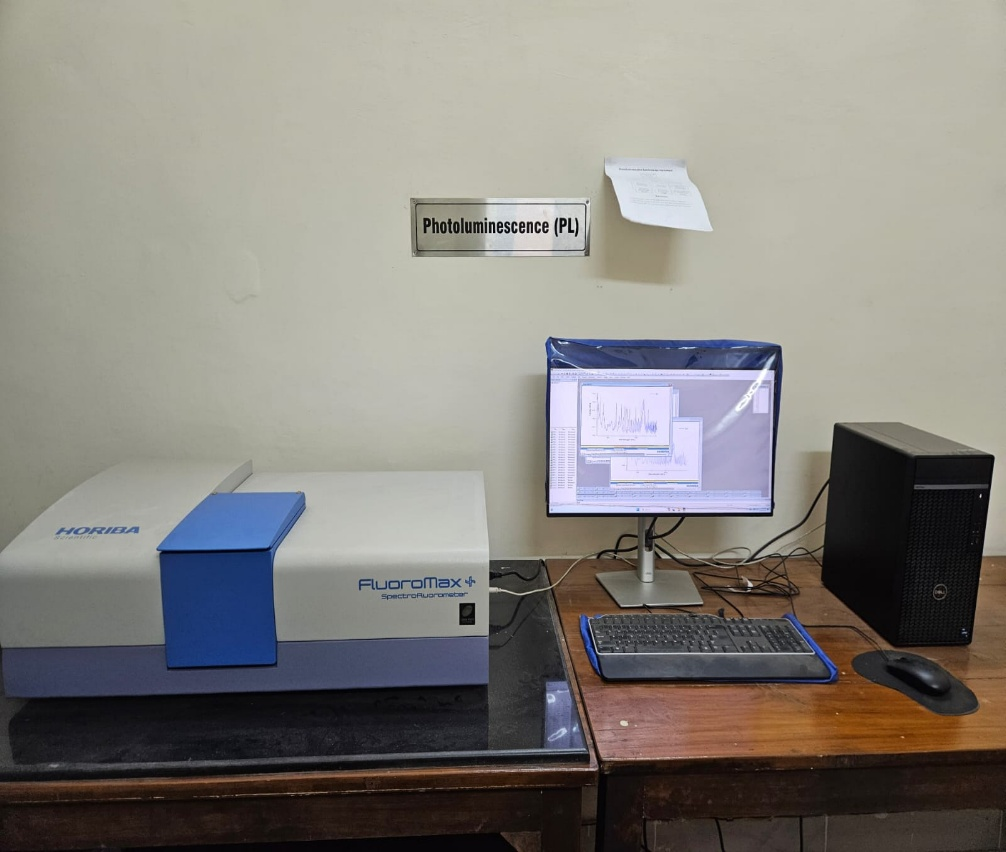
Horiba Fluoromax+ Photoluminescence Spectrometer
The Horiba Fluoromax+ is a state-of-the-art spectrofluorometer designed for photoluminescence studies. It measures fluorescence emission and excitation spectra with high sensitivity, enabling analysis of organic molecules, quantum dots, and semiconductor materials. Equipped with advanced optics and detectors, it provides accurate data on emission intensity, lifetime, and quantum yield. Researchers use the Fluoromax+ to probe electronic transitions, defect states, and energy transfer mechanisms in functional materials. Its versatility supports applications in nanotechnology, optoelectronics, and biosensing. With intuitive software and customizable configurations, the Fluoromax+ remains a trusted instrument for exploring luminescent properties at the frontier of science.